A next-step program · Ages 8–16
Your child has already written characters and invented worlds. Now they write from the one thing no one else has — their own life.
In creative writing, kids invented characters and made things up. In Writing for Life, the material is already there — in the things they've noticed, felt, wondered about, or can't stop thinking about. The job is to shape it into something real.
We start from what's already alive for them — a memory, a question, something that happened. No prompts. No assigned topics.
They learn to write the way they actually think — not the way they think writing is supposed to sound.
By the end of the program, they have one or two complete pieces they're genuinely proud of.
How it works
The first session is about finding the material — what's on their mind, what they want to say, what they've been sitting on. Sometimes this surfaces things that came up during creative writing. Sometimes it's completely new.
Each session, they write. Between sessions, they revise. I give feedback that pushes them — not toward what I'd write, but toward a clearer, stronger version of what they're already trying to say.
We work on how a piece is built — how it opens, how it moves, where it lands. Not templates. Real craft, applied to their specific piece.
The program ends when the writing is done — polished enough to share, read aloud, submit somewhere, or just keep. One strong piece, or a series of shorter ones. Either way, something finished.
What we might create
Neomi, age 13
I never got to meet my grandfather, but he did pass down this necklace. A small silver chain with a star of David at the end.
I guess I gave away that I'm Jewish. I'm not that religious, and my religion does not define me, but there's a lot of anti-semitism out there. People are taught to not like Jews. And that's why I try to explain to people and help them understand the true history behind Judaism.
I really love this necklace, but it can never be mine. It was passed down to my brother. For generations, this necklace was passed down to sons in the family. I saw my brother get his necklace and I really liked it. I was kinda upset I didn't get anything from my grandfather so I went out and bought a necklace that looks almost identical to his. I wear this necklace all the time. I want people to know that I'm Jewish. It's a big part of who I am and even though some people have antisemitic views, I'm proud of my religion and I won't hide that part of me because of them.
When I'm older I hope to pass this necklace on to my kids. And I hope that they will continue to honor these gifts.
Harel, age 12
It was dark at night in the room. The windows were shut and closed, with complete silence, except of course for my cat, Mason.
It was late at night. I was about to sleep. But then, I turned and put my head on my pillow and bam! On my face I see whiskers and white fur. I heard constant meowing from that moment on.
I thought if I kept petting him until I fell asleep he might let me rest, but no. A few minutes later, he jumps on top of me and as Newton's third law states, I had a reaction and jumped, too.
At the end I was feeling tired, and always eyeful of an "attack" on me again from my cat. It was a spooky night with the rustling of my cat running around and playing with his cat toys.
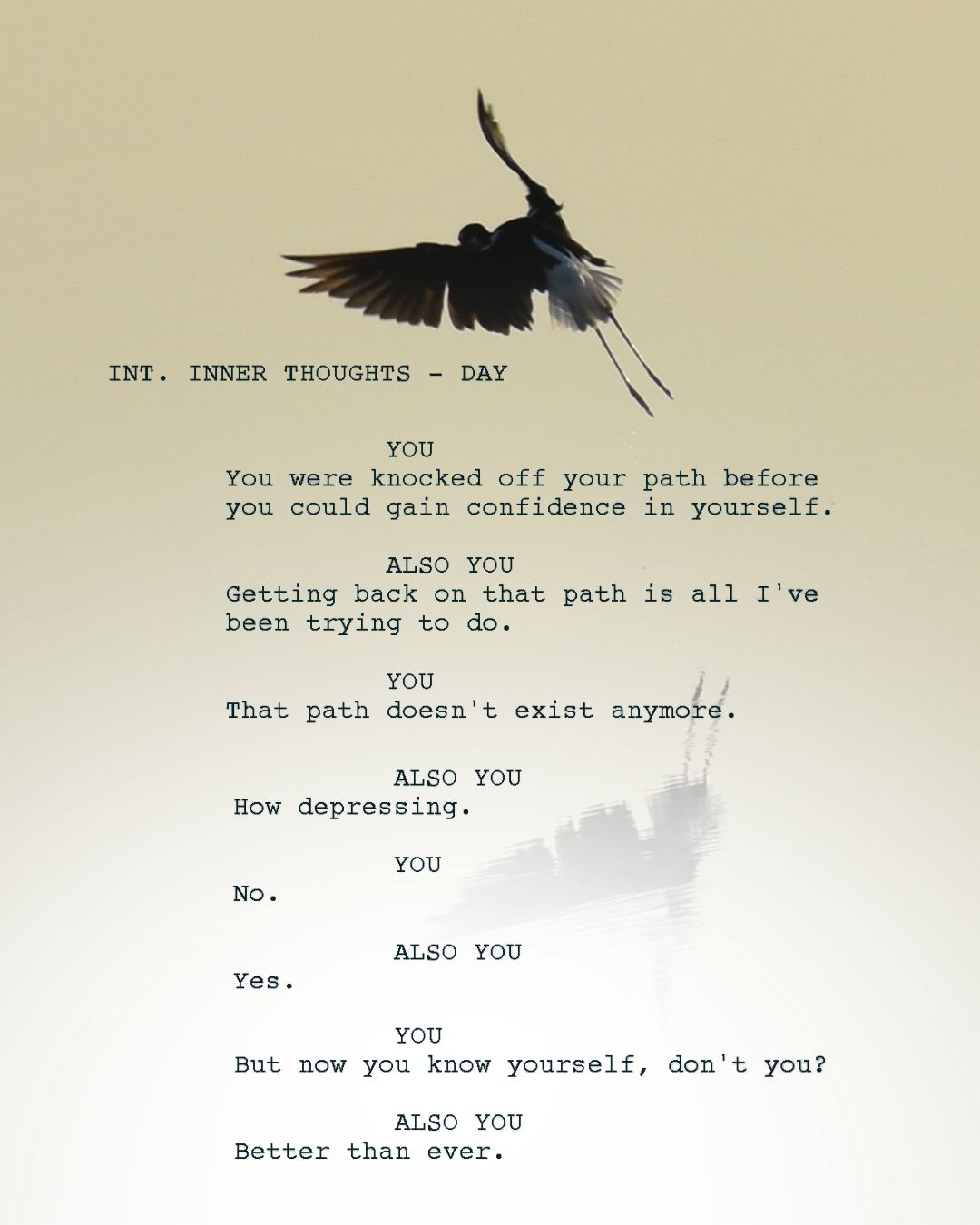
Short scenes, each one its own world
They already write about their life. This gives that writing somewhere to go.
Big opinions, strong feelings, things they notice that other people miss. The writing catches up to the thinking.
School writing feels stiff and disconnected. This is different — it starts from what they actually care about.
They loved the playwriting work. Now they want to try something real — a personal essay, a memoir piece, a story from their own life.
Message me and we'll figure out the right starting point for your child — one month or two, and what kind of piece makes sense to work toward.
Get in touch